After a long day at work, the way you transition into your evening can make all the difference in how you feel the next morning. The right lighting strategy isn’t just about flipping switches—it’s about creating an environment that supports your body’s natural rhythms and helps you truly decompress.

Many professionals struggle with the invisible barrier between work mode and rest mode, often carrying the day’s stress well into the night. Your lighting choices play a more significant role in this transition than you might realize, affecting everything from your stress hormones to your sleep quality and overall mental wellbeing.
🌅 The Science Behind Post-Shift Lighting
Understanding how light affects your body is the first step toward optimizing your evening routine. Your circadian rhythm—the internal clock that regulates sleep-wake cycles—is primarily influenced by light exposure. When you’re exposed to bright, blue-rich light in the evening, your brain interprets this as daytime, suppressing melatonin production and keeping you alert when you should be winding down.
Research published in the Journal of Clinical Endocrinology & Metabolism shows that evening exposure to room light can suppress melatonin by approximately 50% and shorten the duration of melatonin production by about 90 minutes. This disruption doesn’t just affect your sleep—it impacts your mood, cognitive function, and even your metabolism.
The key is working with your biology rather than against it. As the sun sets, your body naturally expects light levels to decrease and color temperatures to shift toward warmer tones. Mimicking this natural progression in your home environment supports healthy hormone regulation and prepares your mind and body for restorative sleep.
🏠 Creating Your Evening Lighting Blueprint
Transforming your evenings starts with a strategic approach to every room you’ll use after work. The goal is to create distinct lighting zones that guide you through different stages of unwinding, from high-energy activities right after work to the calm preparation for sleep.
The Entryway Transition
Your front door represents more than a physical threshold—it’s the psychological boundary between work and home. Install a dimmer switch or use smart bulbs that allow you to set your entryway lighting to a medium-warm tone. This creates an immediate sensory signal that you’re entering a different space with different expectations.
Consider placing a small lamp near your entryway rather than relying solely on overhead lighting. This lower light source creates a more welcoming atmosphere and begins the gradual downward adjustment in light intensity that your evening should follow.
Kitchen and Dining Areas
Meal preparation and dining often occupy the first hour or two after arriving home. These spaces need sufficient lighting for safety and functionality, but that doesn’t mean harsh fluorescent brightness. Opt for warm-white LED bulbs in the 2700K-3000K range, which provide adequate visibility while beginning the shift away from daylight-mimicking tones.
Task lighting under cabinets allows you to illuminate work surfaces effectively without flooding the entire room with bright overhead lights. Pendant lights over dining areas can be dimmed during meals to create a more relaxed atmosphere that supports better digestion and conversation.
Living Room Relaxation Zones
This is where most people spend the bulk of their evening, making it the most critical space for strategic lighting. Layer your lighting with multiple sources at different heights rather than relying on a single overhead fixture. This approach gives you flexibility to adjust the ambiance based on your activity.
Floor lamps with warm bulbs positioned in corners create soft, diffused light that reduces harsh shadows. Table lamps near seating areas provide focused light for reading without illuminating the entire room. If you enjoy watching television, consider bias lighting—a soft glow behind the screen that reduces eye strain without adding blue light exposure.
💡 Smart Lighting Solutions for Automatic Unwinding
Technology can be your ally in creating the perfect evening lighting environment without requiring constant manual adjustments. Smart lighting systems allow you to automate transitions throughout the evening, ensuring your environment naturally guides you toward relaxation.
Programmable LED bulbs can gradually reduce brightness and shift color temperature as the evening progresses. You might set them to begin at 3000K at 6 PM, transition to 2500K by 8 PM, and settle at 2000K or lower by 10 PM. This gradual change is barely noticeable but profoundly effective in supporting your circadian rhythm.
Voice-activated controls eliminate the need to get up and manually adjust lighting, maintaining your relaxed state. You can create custom scenes for different evening activities—”dinner mode,” “reading time,” “wind-down”—each optimized for its purpose.
Motion sensors in hallways and bathrooms prevent you from being jolted by bright lights during evening trips through your home. Set these to activate at low intensity with warm tones after sunset, providing necessary visibility without disrupting your state of relaxation.
🛁 The Bathroom Wind-Down Strategy
Your evening bathroom routine deserves special attention because it’s typically the last lit space you’ll experience before bed. Unfortunately, most bathrooms are designed with bright, cool-toned lighting ideal for morning preparation but terrible for evening wind-down.
Install separate lighting circuits or use smart bulbs that allow you to dramatically reduce brightness in the evening. If possible, add a separate nightlight or small lamp that can serve as your primary light source during evening routines. This prevents the melatonin-suppressing effect of standard bathroom lighting.
For those who enjoy evening baths as part of their decompression routine, consider waterproof LED candles or dim, warm-toned lights. The combination of warm water and appropriate lighting creates a powerful relaxation signal for your nervous system.
📱 Managing Screen Light in Evening Hours
While not technically room lighting, the screens we use in the evening are often the brightest light sources in our environment. A comprehensive evening lighting strategy must address digital devices that can undermine all your other efforts.
Enable night mode or blue light filters on all devices at least two hours before bedtime. Most smartphones and tablets now include automatic scheduling for these features. Set your devices to activate warm color filters starting around sunset, with increasing intensity as bedtime approaches.
Consider the position of your screens relative to other light sources. Viewing bright screens in an otherwise dark room creates extreme contrast that strains your eyes and can cause headaches. Maintain some ambient lighting in the room, even if quite dim, to reduce this contrast.
For dedicated readers, e-readers with front-lighting and adjustable color temperature are vastly superior to tablets or phones for evening use. The front-lighting technology directs light toward the page rather than into your eyes, and many models now offer amber-toned night modes specifically designed for evening reading.
🌙 Bedroom Lighting: The Final Frontier
Your bedroom should be the darkest space in your home during evening hours. Any light in this room should be minimal, warm-toned, and positioned to avoid direct eye contact. The goal is to make this space feel like a natural extension of nighttime rather than a continuation of the day.
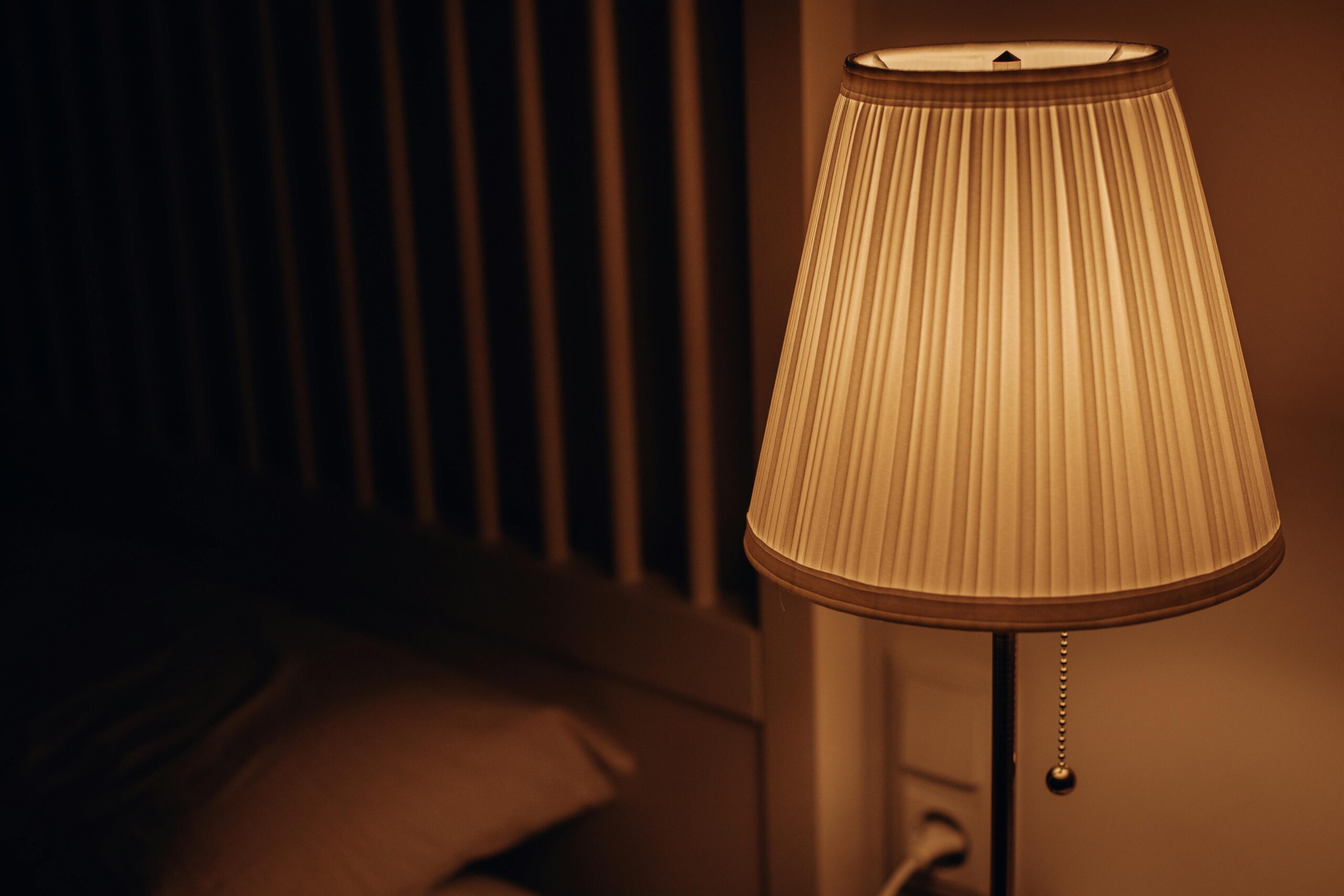
Bedside lamps should use the warmest bulbs available—ideally 2000K or lower. Himalayan salt lamps emit a gentle amber glow that provides just enough light to navigate safely while supporting melatonin production. Book lights with amber LEDs allow for reading without illuminating the entire room.
Blackout curtains or shades are essential for preventing external light pollution from disrupting your sleep environment. Even small amounts of light from streetlights or neighboring buildings can affect sleep quality. If complete darkness feels uncomfortable, a very dim nightlight positioned low and away from the bed provides security without disruption.
🎨 Color Temperature Guide for Evening Success
Understanding color temperature helps you make informed choices about bulbs and settings. Color temperature is measured in Kelvin (K), with lower numbers representing warmer, more amber tones and higher numbers representing cooler, bluer tones.
| Time of Evening | Color Temperature | Purpose |
|---|---|---|
| 6-7 PM | 3000-3500K | Transition period, active tasks |
| 7-9 PM | 2500-3000K | Dinner, light activities, socializing |
| 9-10 PM | 2000-2500K | Relaxation, reading, quiet activities |
| 10 PM-Bedtime | 1800-2000K | Preparation for sleep, minimal activity |
These guidelines aren’t rigid rules but rather a framework to help you structure your evening lighting. Individual preferences and schedules vary, so adjust these recommendations based on your specific bedtime and sensitivity to light.
✨ Alternative Light Sources for Deep Relaxation
Beyond traditional electrical lighting, certain alternative light sources can enhance your evening unwinding routine while providing functional illumination. These options often create a more psychologically soothing environment than standard bulbs.
Candles offer the warmest possible light—around 1500-1800K—along with the calming effect of gentle movement. Beeswax or soy candles avoid the petroleum byproducts of paraffin while adding subtle, natural aromatics. Place them strategically where you’ll spend time sitting still, never where they could be accidentally knocked over.
Fireplace or fire pit light, if available, provides similar benefits with the added warmth and crackling sounds that many find deeply relaxing. Even gas fireplaces with artificial logs create this warm, flickering light that humans find instinctively calming.
Sunset lamps—devices designed to project warm, colorful light that mimics sunrise and sunset—have gained popularity for good reason. These create an immersive lighting environment that can help shift your mental state from active to relaxed, especially in rooms without windows or natural light access.
🧘♀️ Lighting for Evening Activities That Recharge You
Different evening activities benefit from specific lighting approaches. Matching your light to your activity helps you fully engage in whatever will best recharge you for tomorrow.
Exercise and Movement
If your unwinding routine includes yoga, stretching, or light exercise, you’ll need more illumination than for pure relaxation, but it should still be warm-toned. Position lights to avoid harsh shadows while maintaining the evening atmosphere. Indirect lighting that bounces off walls or ceilings works particularly well for movement activities.
Creative Pursuits
Drawing, crafting, journaling, or other creative activities require functional lighting for detail work. Task lighting directed at your work area, combined with dim ambient lighting in the rest of the room, provides the visibility you need without overwhelming your evening calm. Adjustable desk lamps with warm LEDs offer the best solution.
Social Connection
Whether spending time with family or video calling friends, the lighting should be bright enough for interaction but warmer than daytime settings. Avoid overhead lighting that casts unflattering shadows on faces. Instead, use lamps at or above eye level that create even, warm illumination conducive to connection and conversation.
🔋 The Ripple Effect: How Evening Light Impacts Your Tomorrow
The true measure of an effective evening lighting strategy isn’t just how relaxed you feel before bed—it’s how you feel when you wake up. Poor evening light exposure creates a cascade of effects that diminish your next day before it even begins.
When melatonin production is suppressed by inappropriate evening lighting, your sleep architecture suffers. You may experience difficulty falling asleep, more frequent nighttime awakenings, and reduced time in deep sleep stages that are crucial for physical restoration and memory consolidation.
The result is waking up feeling unrefreshed, experiencing afternoon energy crashes, relying on caffeine to maintain alertness, and entering the next evening in a depleted state. This cycle compounds over time, contributing to chronic fatigue, mood disturbances, and reduced cognitive performance.
Conversely, supporting your circadian rhythm with appropriate evening lighting creates a positive cycle. Better sleep means waking naturally with more energy, maintaining stable mood and focus throughout the day, and arriving at the next evening with reserves still available for personal activities rather than collapse.
🏆 Implementing Your Personal Evening Lighting Protocol
Transforming your evenings doesn’t require a complete home renovation or expensive smart home system. Start with these practical steps that anyone can implement immediately.
First, audit your current evening lighting. Walk through your typical evening routine and note which spaces feel too bright, too stark, or uncomfortable. Identify the bulbs you can replace most easily with warmer, dimmable alternatives.
Second, establish your transition time—the point when you’ll consciously shift from daytime to evening lighting modes. For most people, this coincides with arriving home from work or finishing dinner. Set a phone reminder if needed until this becomes automatic.
Third, create your wind-down progression. Identify three distinct phases in your evening—active/transition, relaxation, and sleep preparation—and assign appropriate lighting strategies to each. This doesn’t need to be complicated; even simple changes like turning off half your lights and dimming the rest creates meaningful progression.
Fourth, minimize evening light exposure from sources you control. This includes dimming dashboard lights during evening commutes, reducing indoor lighting when possible, and being intentional about screen time in the final hours before bed.
🌟 Your Evening Sanctuary Awaits
The hours between work and sleep are precious—they’re your time to decompress, connect with loved ones, pursue interests, and prepare yourself for restorative rest. Yet many people unconsciously sabotage these valuable hours with lighting choices that keep their bodies in daytime mode.
By implementing strategic evening lighting, you’re not just changing bulbs—you’re reclaiming these hours and transforming them into a true transition space. You’re working with your biology rather than against it, supporting the natural rhythms that govern your energy, mood, and health.
The initial effort required to adjust your evening lighting setup pays dividends every single night thereafter. Each evening becomes an opportunity to genuinely unwind, each night of sleep becomes more restorative, and each morning you wake with greater reserves to meet whatever tomorrow brings.
Your evenings can be more than just the exhausted gap between work and sleep—they can become the foundation for better tomorrows, starting tonight with something as simple as choosing the right light.