
Creating a comfortable home goes far beyond choosing the right furniture or paint colors. The invisible elements—humidity levels and air quality—play a crucial role in your daily wellbeing and long-term health.

Every breath you take indoors matters more than you might think. Most people spend approximately 90% of their time inside buildings, making indoor environmental conditions a critical factor in overall health. Understanding how to optimize humidity and air quality transforms your living space into a true sanctuary that supports both physical health and mental clarity.
🌡️ Why Humidity Levels Matter More Than You Think
Humidity represents the amount of moisture present in the air, and maintaining proper levels creates the foundation for a comfortable home environment. When humidity strays too far in either direction, your body immediately feels the consequences, even if you cannot identify the exact cause of your discomfort.
The ideal indoor humidity range falls between 30% and 50%. This sweet spot prevents multiple problems while maximizing comfort. Below 30%, the air becomes excessively dry, leading to irritated skin, scratchy throats, and increased susceptibility to respiratory infections. Above 50%, moisture accumulates, creating perfect breeding grounds for mold, dust mites, and bacteria.
The Hidden Costs of Improper Humidity
Low humidity causes static electricity buildup, cracked wooden furniture, gaps in hardwood flooring, and damage to musical instruments. Your body suffers too—dry nasal passages become less effective at filtering airborne pathogens, making you more vulnerable during cold and flu season.
Conversely, excessive humidity feels oppressive and muggy. You might notice condensation on windows, musty odors, peeling wallpaper, or warped wood. More seriously, high humidity accelerates the growth of harmful biological contaminants that trigger allergies and asthma attacks.
🔍 Understanding Air Quality Components
Air quality encompasses multiple factors beyond simple cleanliness. Indoor air often contains five to ten times more pollutants than outdoor air, creating an invisible health challenge that affects everyone differently.
Particulate matter represents one category of indoor pollutants. These microscopic particles originate from cooking, cleaning products, pet dander, dust, and outdoor sources that infiltrate your home. The smallest particles pose the greatest health risks because they penetrate deep into lung tissue.
Volatile Organic Compounds (VOCs)
VOCs are chemicals released from countless household items including paints, furniture, cleaning supplies, air fresheners, and building materials. These compounds evaporate at room temperature, creating invisible clouds of potentially harmful substances. Short-term exposure causes headaches, dizziness, and eye irritation, while long-term exposure links to more serious health conditions.
Common VOC sources include formaldehyde from pressed wood products, benzene from stored fuels and tobacco smoke, and perchloroethylene from dry-cleaned clothing. Even new carpets and fresh paint release elevated VOC levels for weeks or months after installation.
💨 The Humidity-Air Quality Connection
Humidity and air quality interact in complex ways that amplify or mitigate various indoor environmental problems. Understanding this relationship helps you make smarter decisions about managing your home atmosphere.
High humidity accelerates chemical off-gassing from materials and furnishings, increasing VOC concentrations. Moisture also enables biological contaminants to thrive. Mold spores become airborne and multiply rapidly when relative humidity exceeds 60%. Dust mites, microscopic creatures responsible for many allergic reactions, flourish in humid conditions and cannot survive when humidity drops below 50%.
Low humidity creates different challenges. Extremely dry air allows particles to remain airborne longer because moisture normally helps settle dust and allergens. Dry conditions also irritate mucous membranes, compromising your body’s natural defense mechanisms against airborne pathogens.
📊 Measuring Your Indoor Environment
You cannot manage what you do not measure. Investing in proper monitoring equipment provides the data foundation for creating a healthier home environment.
Hygrometers measure relative humidity and are available in analog and digital versions ranging from basic to sophisticated. Digital models often include temperature readings and memory functions to track trends over time. Position hygrometers in main living areas, bedrooms, and basements to identify humidity variations throughout your home.
Air Quality Monitors: Your Indoor Environmental Watchdog
Modern air quality monitors track multiple parameters simultaneously, providing comprehensive environmental data. Quality devices measure particulate matter (PM2.5 and PM10), VOCs, carbon dioxide, temperature, and humidity through a single interface.
These monitors reveal patterns you might otherwise miss. You might discover that cooking certain foods spikes particulate levels, that humidity drops dramatically when heating systems activate, or that VOC concentrations increase after cleaning. This information empowers targeted interventions rather than guessing at solutions.
🛠️ Practical Solutions for Humidity Control
Achieving optimal humidity requires different strategies depending on your climate, home construction, and specific challenges. Most homes need humidity addition during heating seasons and humidity reduction during cooling periods.
Increasing Humidity in Dry Conditions
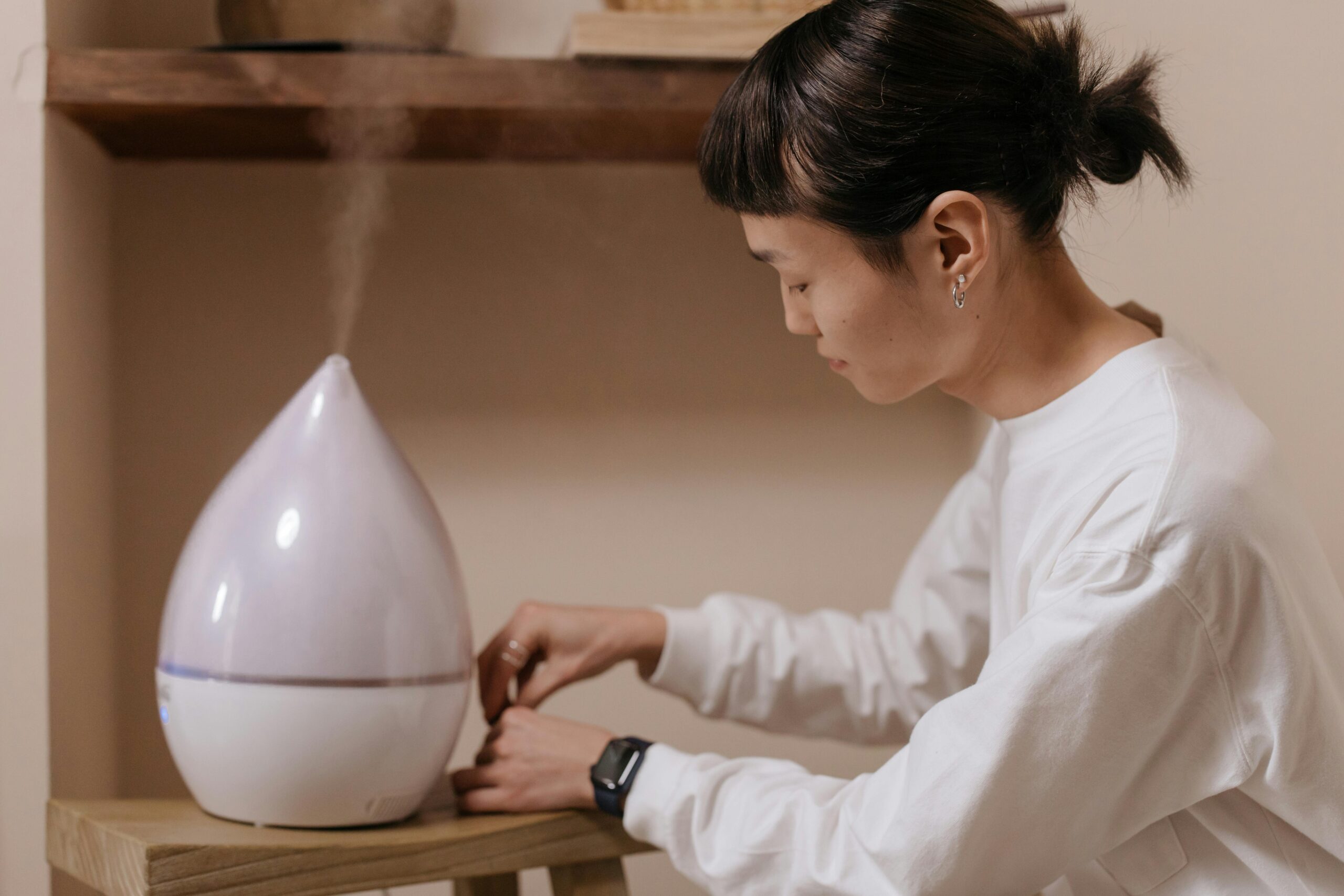
Humidifiers add moisture to indoor air through various mechanisms. Evaporative humidifiers use fans to blow air through wet wicks or filters, naturally humidifying spaces without creating visible mist. Ultrasonic models use high-frequency vibrations to create fine water droplets, operating quietly and efficiently. Steam vaporizers boil water to create germ-free humidity but consume more energy and pose burn risks.
Whole-house humidifiers integrate with HVAC systems, providing consistent humidity throughout your entire home. These systems require professional installation but offer superior convenience and performance compared to portable units.
Simple lifestyle adjustments also boost humidity naturally. Air-drying laundry indoors releases significant moisture. Leaving bathroom doors open after showering distributes humidity to adjacent rooms. Houseplants release water vapor through transpiration while simultaneously filtering air pollutants.
Reducing Excessive Humidity
Dehumidifiers extract moisture from air, protecting homes from dampness-related problems. Refrigerant dehumidifiers work like air conditioners, cooling air to condense water vapor. Desiccant models use moisture-absorbing materials and excel in colder conditions where refrigerant systems lose efficiency.
Proper ventilation serves as your first line of defense against high humidity. Exhaust fans in bathrooms and kitchens should vent outdoors, not into attics or crawl spaces. Run these fans during activities that generate moisture and for 15-20 minutes afterward to fully clear humid air.
Address moisture sources directly. Fix leaking pipes promptly, improve drainage around your foundation, ensure proper grading directs water away from your home, and consider vapor barriers in crawl spaces. These structural improvements provide long-lasting humidity control.
🌿 Improving Indoor Air Quality: Proven Strategies
Creating exceptional air quality requires a multi-faceted approach addressing different pollution sources and employing various purification methods.
Source Control: The Most Effective Strategy
Eliminating or reducing pollutant sources proves more effective than trying to remove contaminants after they enter your air. Choose low-VOC or zero-VOC paints, finishes, and building materials. Select solid wood furniture over particleboard when possible. Avoid synthetic air fresheners and opt for natural alternatives like essential oil diffusers or simply opening windows.
Store chemicals, paints, and solvents in detached garages or sheds rather than basements or attached garages where fumes migrate into living spaces. Remove shoes at entry points to prevent tracking outdoor pollutants inside. Establish pet-grooming routines to minimize dander accumulation.
Ventilation: Fresh Air Exchange
Strategic ventilation dilutes indoor pollutants with cleaner outdoor air. Open windows and doors when weather permits, creating cross-ventilation by opening windows on opposite sides of your home. Even five to ten minutes of fresh air exchange significantly improves indoor air quality.
Mechanical ventilation systems provide consistent air exchange regardless of weather. Energy recovery ventilators (ERVs) and heat recovery ventilators (HRVs) exchange stale indoor air with fresh outdoor air while recovering heating or cooling energy, maintaining comfort while improving air quality efficiently.
🔬 Air Purification Technologies Explained
Air purifiers employ various technologies to remove contaminants, each with distinct advantages and limitations. Understanding these differences helps you select appropriate solutions for your specific needs.
HEPA Filtration: The Gold Standard
High-Efficiency Particulate Air (HEPA) filters capture 99.97% of particles 0.3 microns or larger, effectively removing dust, pollen, pet dander, mold spores, and many bacteria. True HEPA filters meet strict standards, while “HEPA-type” or “HEPA-like” filters provide inferior performance despite similar marketing claims.
HEPA filtration excels at particle removal but does not address gases, odors, or VOCs. Many quality air purifiers combine HEPA filters with activated carbon filters that adsorb chemical pollutants and odors through chemical bonding processes.
Additional Purification Methods
Ultraviolet germicidal irradiation (UVGI) uses UV-C light to destroy microorganisms by damaging their DNA. These systems work well for biological contaminants but do not remove particles or chemicals. Photocatalytic oxidation (PCO) combines UV light with catalysts to break down VOCs and odors at the molecular level.
Ionizers release charged particles that attach to airborne contaminants, causing them to settle on surfaces or collect on charged plates. While effective for particle removal, some ionizers produce ozone as a byproduct—a lung irritant that should be avoided, particularly in occupied spaces.
🏡 Room-by-Room Optimization Guide
Different rooms face unique humidity and air quality challenges requiring tailored approaches for optimal results.
Bedrooms: Your Sleep Sanctuary
Quality sleep depends partly on environmental conditions. Maintain bedroom humidity between 40-50% to prevent dry throat irritation while discouraging dust mites. Position air purifiers near beds for maximum benefit during sleep hours when you breathe the same air for extended periods.
Wash bedding weekly in hot water to eliminate dust mites and allergens. Use allergen-proof pillow and mattress covers to create barriers against microscopic pests. Minimize clutter and decorative fabrics that accumulate dust.
Kitchens: Managing Cooking Pollutants
Cooking generates significant particulate matter, especially from high-heat methods like frying and grilling. Always use range hoods vented outdoors when cooking, setting fans to high during and after food preparation. Gas stoves release nitrogen dioxide and other combustion byproducts, making proper ventilation particularly critical.
Control humidity from boiling water and steam by covering pots when possible and maintaining exhaust ventilation. Clean range hood filters monthly to ensure effective performance.
Bathrooms: Winning the Moisture Battle
Bathrooms face constant moisture challenges from showers and baths. Run exhaust fans during bathing and for at least 20 minutes afterward. Wipe down shower walls and doors to remove standing water that evaporates into room air.
Check for and repair any plumbing leaks promptly. Ensure bathroom doors have adequate gaps underneath for air circulation. Consider a small dehumidifier if bathroom humidity remains problematic despite proper ventilation.
Basements: Preventing Underground Problems
Below-grade spaces naturally accumulate moisture from groundwater and foundation seepage. Basements typically require dehumidification to maintain healthy humidity levels. Aim for 50% or below to prevent mold growth and musty odors.
Improve basement air quality through proper ventilation, sealing foundation cracks, installing vapor barriers, and ensuring proper drainage around your home’s perimeter. Finish basement floors and walls with moisture-resistant materials designed for below-grade applications.
🌱 The Role of Plants in Indoor Environments
Houseplants contribute to healthier indoor environments through multiple mechanisms, though their impact on air quality has been somewhat overstated in popular media.
NASA research demonstrated that plants remove certain VOCs from sealed chambers, leading to widespread claims about their air-purifying abilities. However, realistic home conditions with air exchange and typical plant quantities result in modest air cleaning effects compared to mechanical filtration.
Plants do provide measurable benefits. They increase humidity through transpiration, potentially beneficial in dry climates or during heating seasons. The psychological benefits of indoor greenery—reduced stress, improved mood, and enhanced cognitive function—are well-documented and arguably more significant than their air filtration capabilities.
Choose houseplants wisely based on your home conditions. Snake plants and pothos tolerate low light and neglect. Spider plants and peace lilies effectively remove certain chemicals while thriving in typical indoor conditions. Avoid overwatering, which creates soggy soil that promotes mold growth and fungus gnats.
⚡ Seasonal Adjustments for Year-Round Comfort
Indoor environmental needs shift dramatically with seasons, requiring proactive adjustments to maintain optimal conditions throughout the year.
Winter heating systems dramatically reduce relative humidity by warming cold, dry outdoor air. Cold air holds less moisture than warm air, so when frigid winter air enters your home and heats up, relative humidity plummets. Many homes experience winter humidity levels below 20%, creating uncomfortable dryness. Humidification becomes essential during heating seasons in most climates.
Summer presents opposite challenges in many regions. Warm air holds more moisture, and air conditioning removes some but not always sufficient humidity. Humid climates may require supplemental dehumidification even with air conditioning. Opening windows during summer can introduce excessive outdoor humidity along with outdoor pollutants like pollen.
Spring and fall transition periods offer excellent opportunities for natural ventilation in moderate climates. Take advantage of mild weather by opening windows regularly to flush out accumulated indoor pollutants with fresh outdoor air.
💡 Creating Your Personal Action Plan
Transforming your indoor environment begins with assessment, followed by prioritized interventions based on your specific conditions and budget.
Start by establishing baseline measurements. Use hygrometers and air quality monitors to document current conditions in different rooms at various times. Identify problem areas and patterns—perhaps the bedroom is excessively dry, or the basement shows elevated humidity and poor air quality.
Prioritize issues based on health impact and feasibility. Address serious problems like visible mold, persistent musty odors, or extreme humidity levels first. Implement free or low-cost solutions before investing in expensive equipment. Sometimes simple changes like improving ventilation habits or fixing leaks produce dramatic improvements.
Set realistic goals and timelines. You need not perfect every aspect simultaneously. Perhaps focus on bedrooms first since you spend one-third of your life sleeping, then address common areas, and finally tackle utility spaces.
Monitor and adjust continuously. Indoor environments change with seasons, weather, occupant activities, and building aging. Regular monitoring helps you identify new issues early and verify that implemented solutions continue working effectively.
🎯 The Health Benefits of Optimized Indoor Environments
Investing time and resources into humidity and air quality management delivers measurable health dividends that extend far beyond simple comfort.
Respiratory health improves significantly with proper humidity and clean air. Dry air irritates airways, while optimal humidity maintains the protective mucous layer in nasal passages and lungs that traps pathogens and particles. Reduced airborne allergens and irritants mean fewer asthma attacks, allergic reactions, and respiratory infections.
Sleep quality benefits from comfortable humidity levels and clean air. Dry air causes nighttime coughing and congestion that disrupts sleep cycles. Dust mites and mold spores trigger overnight allergic reactions that prevent restorative rest. Optimized conditions support the deep, uninterrupted sleep essential for physical recovery and mental clarity.
Cognitive function improves in properly managed environments. Studies show that high CO2 levels—a common indoor air quality problem—impair decision-making and complex thinking. Adequate ventilation maintains oxygen-rich, pollutant-free air that supports mental performance.
Your home should be your healthiest space, not a source of environmental stress that undermines wellbeing. Taking control of humidity and air quality transforms your living environment into a true sanctuary that actively supports your health goals rather than working against them.
The journey toward mastering comfort through optimized humidity and air quality represents an investment in your most valuable asset—your health. Start with awareness, make incremental improvements, and enjoy the profound difference that invisible environmental factors make in your daily life and long-term wellness.