In our hyperconnected world, finding moments of true calm has become a precious commodity. Low-stimulation lighting offers a scientifically-backed pathway to transform any space into a sanctuary of peace.

The impact of lighting on our mental state goes far beyond simple aesthetics. Research consistently demonstrates that harsh, bright, or blue-spectrum lighting triggers stress responses in our bodies, elevating cortisol levels and disrupting our natural circadian rhythms. When we deliberately create environments with softer, warmer, and more intentional lighting, we give our nervous systems permission to downshift from constant high alert into restorative modes of functioning.
🌙 Understanding the Science Behind Low-Stimulation Lighting
Our brains process visual information constantly, even when we’re not consciously aware of it. Bright overhead lighting, flickering fluorescents, and blue-heavy LED bulbs all create subtle but persistent neurological demands. These demands accumulate throughout the day, contributing to what researchers call “cognitive load”—the mental effort required to process environmental stimuli.
Low-stimulation lighting works by reducing this cognitive burden. Warm color temperatures (typically between 2000K and 3000K) mimic the natural light of sunset and candlelight, signaling to our bodies that it’s time to transition from active engagement to restful states. This shift isn’t merely psychological; it triggers measurable changes in neurotransmitter production, particularly increasing melatonin while decreasing cortisol.
The photoreceptors in our eyes, especially the intrinsically photosensitive retinal ganglion cells, are particularly sensitive to blue wavelengths. When we eliminate or reduce blue light exposure in our relaxation spaces, we directly influence the suprachiasmatic nucleus—our brain’s master clock—allowing it to prepare the body for rest and recovery.
Creating Your Foundation: Choosing the Right Light Sources
The transformation of your space begins with selecting appropriate light sources. Not all bulbs are created equal when it comes to creating a calming environment. Traditional incandescent bulbs naturally emit warmer tones, though they’re increasingly difficult to find and energy-inefficient. Modern alternatives include warm-spectrum LED bulbs specifically designed for relaxation spaces.
When shopping for bulbs, look beyond the wattage. The color temperature rating tells you everything you need to know about a bulb’s calming potential. Anything rated at 2700K or below will provide that essential warm, amber glow that promotes relaxation. Many smart bulbs now offer adjustable color temperatures, allowing you to customize your lighting throughout the day.
Bulb Types for Maximum Relaxation
- Salt lamps: Emit a naturally warm, orange glow while potentially ionizing the air
- Amber LED bulbs: Specifically designed to filter out blue wavelengths entirely
- Dimmable warm-white LEDs: Offer flexibility to adjust intensity based on your needs
- Flameless candles with warm LEDs: Provide the ambiance of candlelight without safety concerns
- Edison-style vintage bulbs: Deliver aesthetic appeal alongside warm light quality
Strategic Placement: Where Light Matters Most
The positioning of your light sources dramatically affects their stress-reducing impact. Overhead lighting, even when warm-toned, can feel institutional and harsh. Instead, focus on creating layers of light at different heights throughout your space, emphasizing indirect and ambient sources over direct illumination.
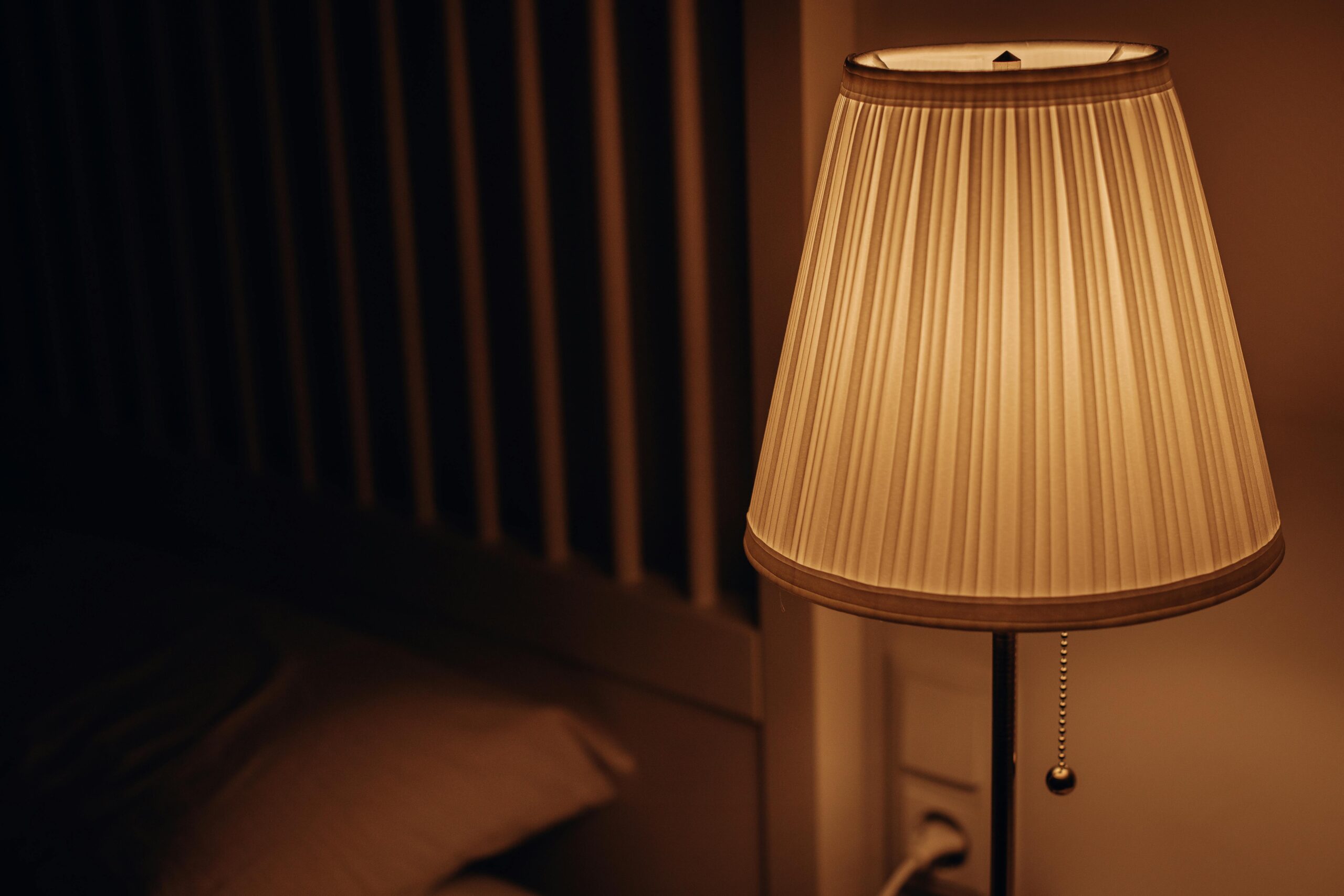
Corner floor lamps with fabric shades diffuse light beautifully, casting soft glows upward and outward rather than directly into your field of vision. Table lamps positioned below eye level when seated create pools of warm light without causing glare. Wall sconces with upward-facing bulbs bounce light off ceilings, providing illumination that feels natural and unobtrusive.
Consider the concept of “light pooling”—creating distinct areas of gentle illumination rather than flooding entire rooms with uniform brightness. This approach mirrors how natural light behaves at dusk, with shadows and gradients that our brains recognize as signals for winding down.
💡 Dimming Technology: Your Most Powerful Tool
If you could make only one upgrade to your lighting setup, installing dimmer switches would deliver the highest return on investment. The ability to adjust light intensity gives you complete control over your environment’s stimulation level, allowing you to fine-tune based on your current needs and time of day.
Modern smart dimmers connect to your smartphone or voice assistants, enabling you to create preset scenes for different activities. A “deep relaxation” setting might reduce lights to 15-20% brightness, while a “reading” preset might hover around 40%. This eliminates the need to fiddle with multiple switches when you’re already in a relaxed state.
For renters or those unable to install hardwired dimmers, plug-in dimmer adapters offer similar functionality without requiring electrical work. Many smart bulbs also include dimming capabilities through their companion apps, though it’s worth noting that repeatedly using app-based controls can reintroduce the screen-time stress you’re trying to avoid.
Color Temperature Timing: Aligning Light with Your Natural Rhythms
The most sophisticated low-stimulation lighting setups incorporate temporal awareness—changing color temperature and intensity throughout the day to support your circadian biology. This approach, sometimes called “human-centric lighting,” recognizes that the light supporting focus and energy at 10 AM is precisely the wrong light for 10 PM.
During evening hours, progressively warmer and dimmer lighting helps your body transition naturally toward sleep readiness. Starting around two hours before your target bedtime, begin reducing blue light exposure and overall brightness. By the final hour before sleep, your relaxation space should be illuminated almost exclusively by very warm sources (2200K or lower) at minimal intensity.
Several apps and smart lighting systems can automate this transition, gradually shifting your home’s lighting as sunset approaches. These systems use your location to calculate actual sunset times, then replicate that color temperature progression indoors, effectively extending your body’s natural response to the day’s end.
🕯️ Beyond Electric: Alternative Light Sources
While modern LED technology offers convenience and energy efficiency, some of the most calming lighting comes from non-electric sources. Real candles provide naturally warm, flickering light that humans have evolved alongside for thousands of years. The slight movement and imperfection of candlelight engages our visual system in a fundamentally different way than static electric sources.
If open flames concern you, battery-operated candles with realistic flicker technology have improved dramatically in recent years. High-quality options use sophisticated algorithms to replicate the random movement patterns of actual flames, triggering the same calming responses without the safety risks.
Salt lamps carved from Himalayan salt crystals offer another alternative, emitting a distinctive peachy-orange glow when illuminated from within. While claims about negative ion generation remain scientifically debatable, their contribution to low-stimulation environments is undeniable—the warm color temperature and soft light diffusion create immediate visual calm.
Addressing Different Spaces: Room-by-Room Strategies
Bedroom Sanctuaries
Your sleeping space deserves the most careful attention to lighting design. Eliminate all overhead fixtures if possible, relying instead on bedside lamps with warm bulbs and blackout-capable shades. If you read before sleep, position adjustable reading lights that illuminate your book without splashing light across the room or into your partner’s space.
Consider installing amber nightlights for safe navigation without sleep disruption. These low-wattage bulbs provide just enough visibility to move safely while preserving your melatonin production and sleep depth.
Living Room Decompression Zones
Living spaces often serve multiple functions, requiring more flexible lighting solutions. Create distinct zones with dedicated lighting—a bright area for activities requiring focus, and deliberately dimmer corners for unwinding. Floor lamps with three-way bulbs offer quick adjustments without smart technology.
String lights with warm LEDs can add visual interest while maintaining low stimulation levels. Drape them along shelving, behind furniture, or across architectural features to create depth and warmth without harsh brightness.
Bathroom Transitions
Bathrooms present unique challenges, as safety requires adequate lighting for certain tasks. Install separate circuits for task lighting and ambient lighting, allowing you to use bright, neutral light when needed while maintaining warm, dim options for evening routines. A backlit mirror provides excellent task lighting without the harshness of overhead fixtures.
🎨 The Role of Lamp Shades and Light Modifiers
The accessories surrounding your bulbs matter just as much as the bulbs themselves. Lamp shades act as light diffusers and color filters, dramatically affecting the quality of illumination in your space. Fabric shades in warm tones—cream, amber, terracotta—enhance the relaxing qualities of warm bulbs by adding an additional layer of color warmth.
Translucent materials create soft, even diffusion, while opaque shades with open tops and bottoms direct light upward and downward, leaving the sides relatively dark. This creates dramatic ambient effects without direct glare. Rice paper shades offer particularly beautiful diffusion, scattering light gently in all directions.
For existing fixtures with harsh qualities, consider adding aftermarket diffusers or frosted glass covers. These simple additions can transform aggressive lighting into something far more suitable for relaxation spaces.
Smart Lighting Systems: Technology in Service of Calm
Modern smart lighting platforms offer unprecedented control over your environment, but they require thoughtful implementation to truly serve relaxation goals. The key is setting up automated routines that work invisibly in the background rather than requiring constant interaction with devices and screens.
Configure your system to automatically dim and warm your lights as evening progresses, eliminating the need for manual adjustments. Create voice-activated scenes so you can say “relaxation mode” and have your entire space transform without touching a screen. Use motion sensors to trigger gentle pathway lighting at night, maintaining darkness in sleeping areas while ensuring safe movement.
The irony of using technology to reduce stimulation isn’t lost—the goal is to set up systems that then fade into the background, working automatically without requiring your attention or cognitive engagement.
⚡ Managing Hidden Light Sources
True low-stimulation environments require addressing more than intentional lighting. Electronic devices introduce countless sources of unwanted light pollution: LED indicator lights on appliances, charging indicators, router lights, and television standby indicators all contribute subtle but cumulative stimulation.
Conduct a thorough audit of your relaxation space at night with all intentional lights off. You’ll likely discover dozens of small light sources you’d stopped consciously noticing. Cover them with black electrical tape, disable them in device settings when possible, or relocate devices outside your primary relaxation zones.
Power strips with illuminated switches can be replaced with non-illuminated versions. Smart plugs can turn off entire device clusters, eliminating standby lights entirely during relaxation hours. This attention to detail compounds the benefits of your intentional lighting design.
Measuring Success: How to Know It’s Working
The effectiveness of your low-stimulation lighting setup reveals itself in subjective feelings and measurable behaviors. You should notice easier transitions into relaxation states, reduced time spent scrolling devices in the evening, and improved sleep onset latency. Many people report feeling more mentally “ready” for sleep when entering properly lit spaces.
Track your sleep quality using whatever methods work for you—wearable devices, sleep apps, or simple journaling. Most people notice improvements within 3-7 days of consistent evening light management. Energy levels during the day often improve as nighttime sleep deepens and becomes more restorative.
Pay attention to your autonomic nervous system signals. Do you feel your shoulders dropping and your breathing deepening when you enter your transformed space? Does your jaw unclench? These subtle physical responses indicate your nervous system is responding appropriately to the environmental cues you’ve created.
🌟 Maintaining Your Low-Stimulation Environment
Creating the perfect lighting setup is just the beginning—maintaining its effectiveness requires ongoing attention and occasional refinement. As seasons change, sunset times shift dramatically, requiring adjustments to automated lighting schedules. What felt perfectly dim in winter might seem too dark during summer’s long twilights.
Replace bulbs promptly when they burn out, as the temptation to temporarily substitute a “wrong” bulb often becomes permanent. Keep spare bulbs in your preferred color temperatures on hand to avoid this compromise. Clean lamp shades and fixtures regularly, as dust accumulation reduces light output and can alter color temperature perception.
Periodically reassess your setup with fresh eyes. Invite a friend to experience your space and provide feedback. Sometimes we adapt to our environments so completely that we stop noticing opportunities for improvement that are obvious to newcomers.
Investment Considerations: Building Your Setup Over Time
Transforming your space doesn’t require massive upfront investment. Start with the areas where you spend the most time during evening hours, perfecting those spaces before expanding to less critical zones. A few strategic purchases—two or three quality warm bulbs, a dimmer switch, and perhaps one well-placed lamp—can create dramatic improvements for under fifty dollars.
As budget allows, expand your setup gradually. Smart bulbs typically cost more than standard LEDs but offer functionality that justifies the premium. A complete smart lighting system represents a significant investment but delivers convenience and automation that compounds the stress-reduction benefits.
Consider the broader financial picture: improved sleep quality often reduces healthcare costs, increases productivity, and enhances overall quality of life. Framing lighting upgrades as health investments rather than mere aesthetic improvements puts their value in proper perspective.
Final Thoughts on Your Journey to Tranquility ✨
The transformation of your space through thoughtful lighting design represents one of the most accessible and impactful changes you can make for your mental health and stress management. Unlike many wellness interventions requiring ongoing effort or discipline, properly configured lighting works automatically and continuously once established.
Your relationship with your environment shapes your daily experience more profoundly than most people realize. By taking control of this fundamental element, you create a foundation supporting every other aspect of your wellbeing. The calm you cultivate in your physical space inevitably extends into your mental and emotional landscape, creating ripples of benefit throughout your life.
Begin tonight with whatever resources you have available. Dim the lights you can dim, replace one bright bulb with a warm alternative, light a candle. Each small step toward reduced visual stimulation is a step toward the peace and decompression your nervous system craves. Your future self, arriving home to a sanctuary of carefully crafted calm, will thank you for the care you invested today.